Keynote Lecture
基調講演に
Emory 大学 "Translational
Social Neuroscience" センター長の
Larry Young 博士を招聘いたしました。
"Translational Social Neuroscience"
とは基礎神経科学、精神医学、社会学を統合した分野横断的な新しい学問分野で、ヒト社会を生み出す行動システム及びその分子神経基盤の解明を目的にし
ています。これまでに Young 博士は北米に生息する 2
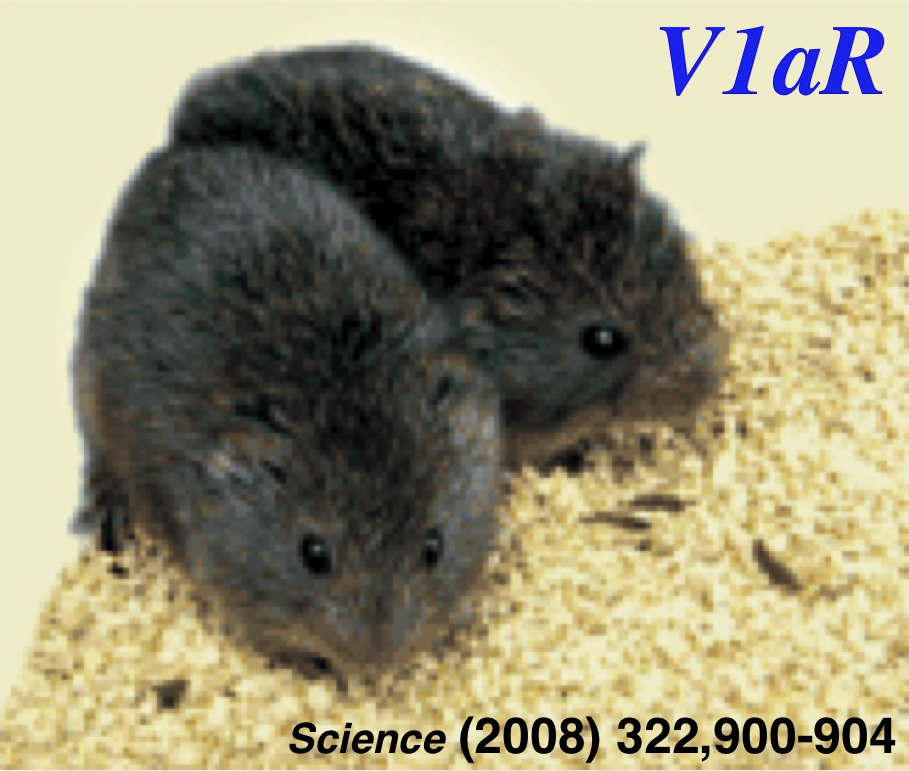
種の野生ハタネズミ近縁種がそれぞれ一夫一妻制または一夫多妻制を営む現象に着目し、つがい形成などの社会個体認知に脳内ホルモン ( バソプレッシンやオキシトシン )
が重要な役割を果たしていることを分子生物学的手法を用いて証明しました。さらに脳内ホルモンがヒトの絆形成 (social
bonding)
に果たす役割や自閉症との関連についても精力的に研究されています。本シンポジウムでは
Young
博士に参加していただき、様々な実験モデル動物の基礎研究が拓く神経科学の未来について考えたいと思います。
Dr. Larry
J. Young
The Neural Mechanisms of
Social
Bonding: Implications for Novel Pharmacotherapies for Autism
Center for Translational Social Neuroscience, Department of Psychiatry and Behavioral Sciences, Yerkes National Primate Research Center, Emory University School of Medicine, Atlanta GA, USA.
The neuropeptides oxytocin and vasopressin play important roles in several aspects of social cognition and behavior, including social recognition, parental nurturing and social bonding. Several studies suggest that these neuropeptides increase the saliency of social stimuli, enhancing the neural processing of social cues. A series of studies in monogamous prairie voles demonstrate that variation in oxytocin and vasopressin receptor systems contributes to both species differences and individual variation in social behavior. Oxytocin and vasopressin receptor activation in the mesolimbic dopamine reward pathway plays an important role in social bond formation in monogamous species. We have identified genetic polymorphisms that robustly predict neuropeptide receptor expression in the brain, which in turn predicts social behaviors, including susceptibility to the impact of early social stressors on later life social attachment. In humans, intranasal oxytocin enhances attention to social cues, the ability to infer the emotions of others, and socially reinforced learning. These observations suggest that the oxytocin system may be a viable target for novel pharmacological strategies for improving social cognition in autism. Our data suggest that drugs that stimulate endogenous oxytocin release may be useful as an adjunct therapy for behavioral interventions for autism.
References:
Modi ME, Young LJ (2012) The oxytocin system in drug discovery for autism: animal models and novel therapeutic strategies. Hormones and Behavior. 61(3):340-50
Ross HE, Young LJ (2009) Oxytocin and the neural mechanisms regulating social cognition and affiliative behavior. Front Neuroendocrinol 30:534-547.
Donaldson ZR and Young LJ (2008). Oxytocin,Vasopressin, and the Neurogenetics of Sociality. Science. 322, 900-904.
Young LJ, Wang Z (2004) The neurobiology
of pair bonding. Nat Neurosci 7:1048-1054.